It is the year 1924, in Tokyo, Japan. Mr. Ueno works at a big school. He lives with his dog. The dog's name is Hachiko.
Every morning, Mr. Ueno walks to Shibuya Station and takes the train to work. Hachiko walks with him. Every day, when it is time for the train to come back, Hachiko is at the station again. Mr. Ueno comes out, and the dog runs to him. They walk home together.
Every morning. Every day. For one year, and more.
Then, one day in May 1925, Mr. Ueno goes to work and does not come back. He dies at work, far from home.
At the station, Hachiko waits. The train comes in. Many people come out. Mr. Ueno does not.
The next day, Hachiko is at the station again. He waits. And the next day. And the next.
Years go by. Every day, Hachiko comes to the station and waits for his friend. The people at the station know him now. They give him something to eat, and water. Children know his name. "Look," the people say. "He is waiting again."
Nine years go by. The dog is old now. But every day, he is there. People start to come from far away — only to see the dog.
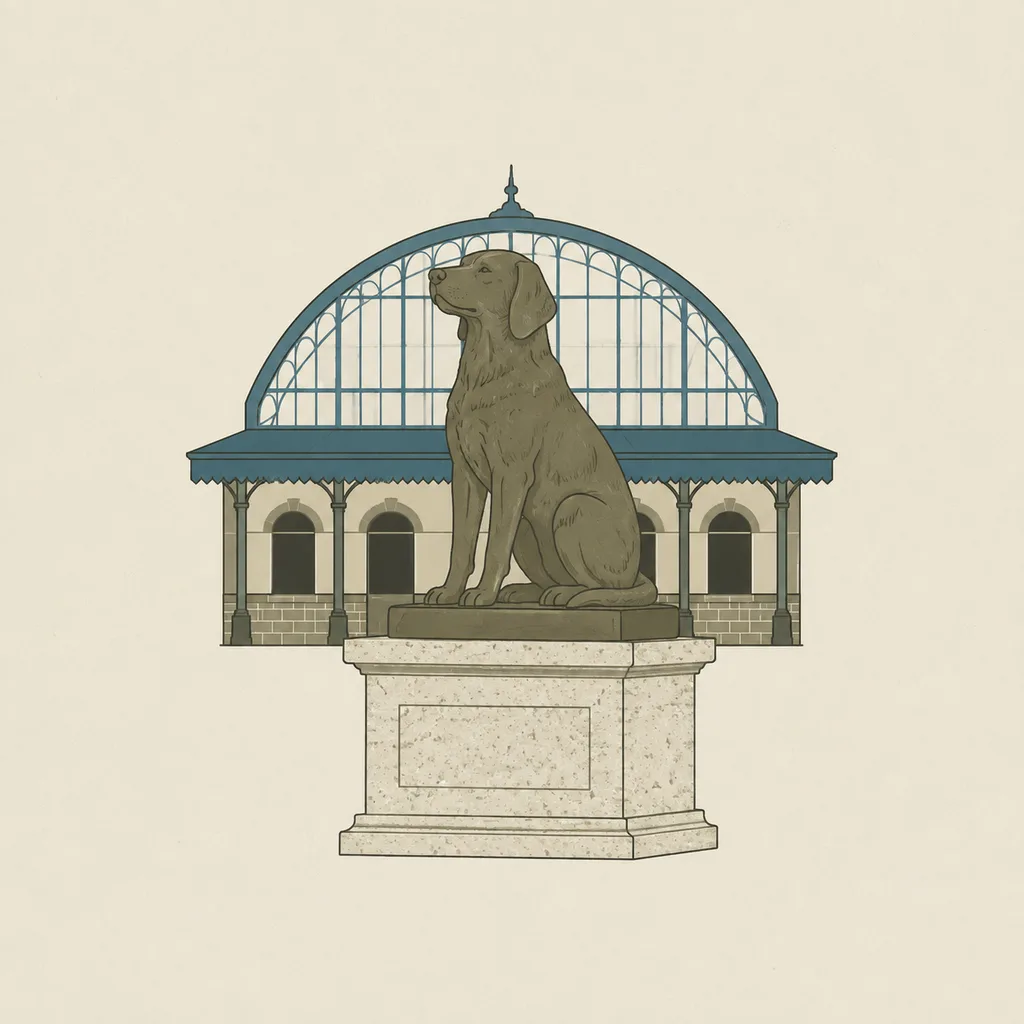
In 1934, the people of Tokyo make a statue of Hachiko at Shibuya Station. Hachiko is there that day, too. He looks at it — a dog, waiting.
In March 1935, Hachiko dies, near the station, in the place he knows.
But this is not the end. Today, the statue is at Shibuya Station. It is the meeting place of Tokyo. Friends say: "See you at Hachiko!" And every day, people stand by the statue and wait — for a friend, for a mother, for love.
Hachiko is with them.