1. The question of the century
By 1950, science stood in front of a locked door. Inside every living cell sits a long, thin molecule called DNA, and the people studying it were more and more sure that it carried life's building plan — the message passed from parents to children. But no one knew its shape, and without the shape, no one understood how the message was written, copied, or read.
The one who opened that door first would take a place in history. Several teams were running for it, with smiles and without them, in three cities.
2. The woman with the camera
Rosalind Franklin was born in London in 1920, into a family that expected serious things and got them. She took her Cambridge degree, and in Paris she learned an art few people on earth knew: taking pictures of crystals with X-rays. Such a photograph shows no object — only a pattern of shadows — but a reader who really understands the shadows learns exactly how everything inside is built.
She was, by most accounts, the best in the world at it: careful, demanding, hard on weak work — her own included. In 1951, King's College London brought her in to turn her cameras on DNA.
The laboratory received her badly. A man already working there, Maurice Wilkins, believed she came to help him; she knew she came to lead her own work. That mistake turned into three years of cold silence — a small office war that ended up changing the history of science.
3. Fifty-one
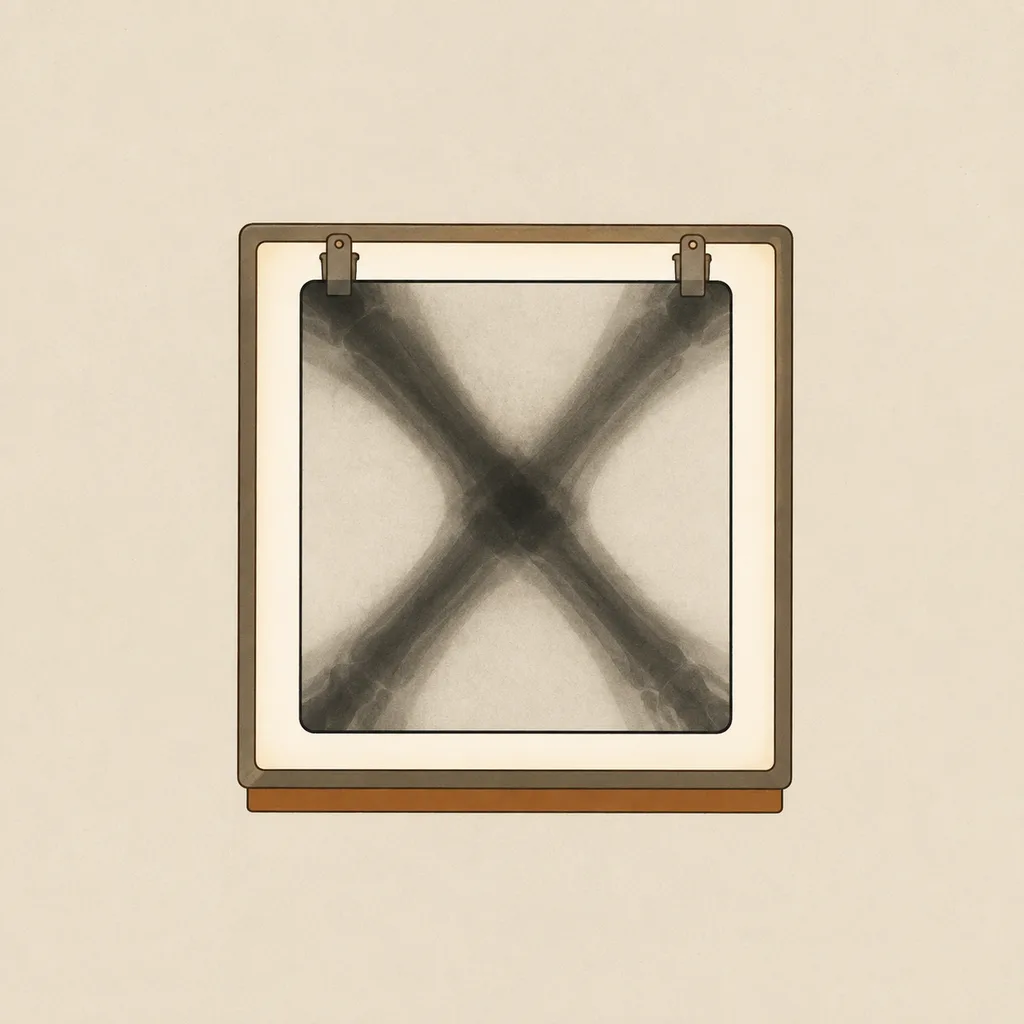
Through 1952, Franklin and her student Raymond Gosling made photographs of DNA sharper than any laboratory anywhere. One picture, made that May — a single photograph that took sixty hours — stood out from all the rest. In the laboratory's records it was simply number 51: a dark X of shadows, clean as a written name.
To the right reader, Photograph 51 all but shouted its secret — this molecule is a spiral. Franklin, careful by nature, wanted the full mathematics before she said so in public. She noted the spiral, and continued measuring. The answer of the century sat quietly in her files.
4. January 1953
In January 1953, Wilkins showed Photograph 51 to James Watson — a young man from the other side of the race, at Cambridge — without asking Franklin. Watson wrote later that his mouth fell open and his heart jumped. Around the same time, a short report of Franklin's careful numbers reached his partner, Francis Crick, through another door. None of it was stolen, in the police sense of the word; all of it moved without her knowledge.
Watson and Crick had been chasing the answer with models — building possible shapes with their hands, and guessing. With her picture and her numbers, the guessing fell to almost nothing. Weeks later, their model stood complete: the famous double spiral. It appeared in the science magazine Nature that April. Franklin's own paper, with the photograph, ran third in the same issue — looking, to the world, like a supporting act.
She moved to another laboratory, did beautiful work on viruses, and it seems she never learned what her quiet files gave to the find of the century. In 1958 she died of cancer, at 37. In 1962 the Nobel Prize went to Watson, Crick and Wilkins. The rules do not allow the dead to win; her name was not spoken in Stockholm.
5. Reading the shadows
It took years — and Watson's own book, which hid nothing — for the story to right itself. Today her part is taught in every lesson where DNA is taught, and schools, laboratories, and the machine built to roll across Mars carry her name.
Science, though, has not changed its ways as much as it likes to say. The clean result gets the photograph; the years of careful measuring stand just outside the picture. When you next see the famous spiral, look once at the dark X behind it — sixty hours of light and shadow, made by a woman who read shadows for a living, and who asked only to finish the mathematics first.